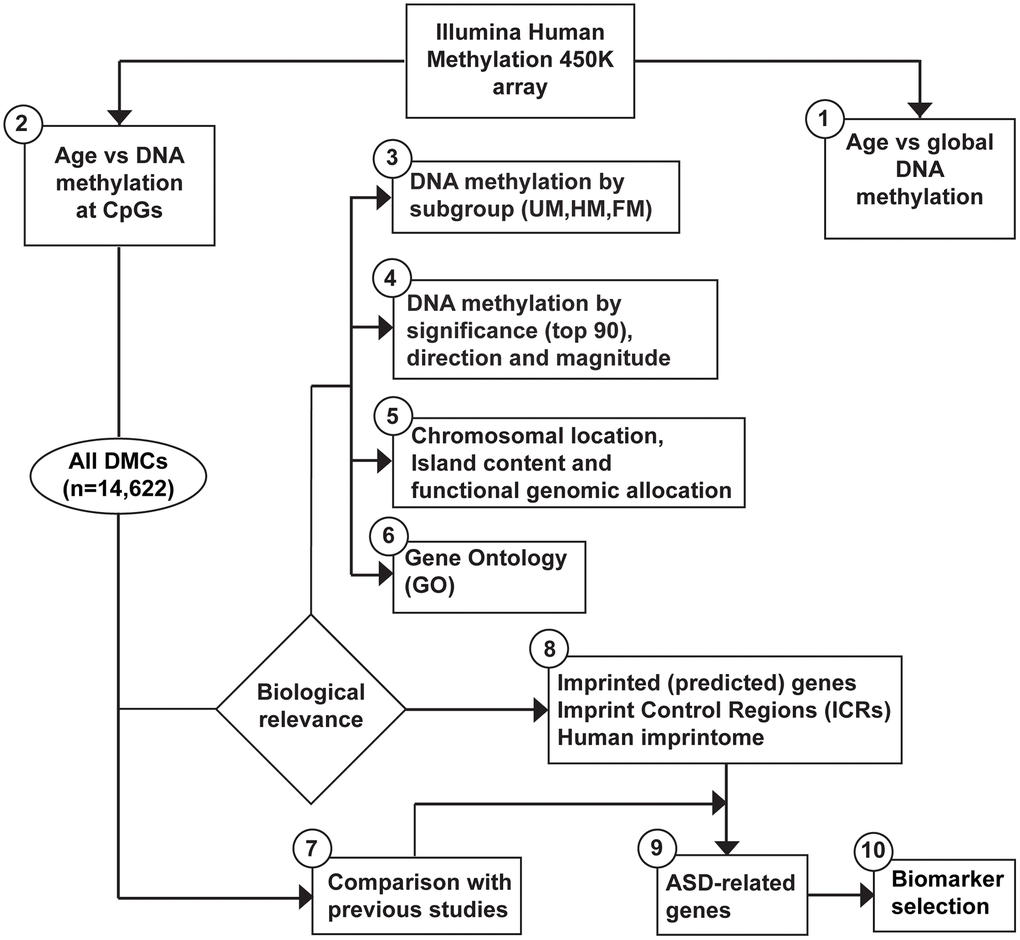
Figure 1.Workflow to assess age-related DNA methylation changes in sperm and biomarker selection for ASD. Data generated from the Illumina HumanMethylation450 BeadChip went through the following analytic procedures. (1) global DNA methylation (mean per subject) by age. (2) DNA methylation at individual CpGs by age. Note, additional tests were performed, as described in the methods section. (3) We subdivided our outcome data as follows: Unmethylated (UM, mean β-value <0.2), Hemi-methylated (HM, 0.20≤ mean β-value ≤0.80), and Fully methylated (FM, mean β-value >0.80), defined by the mean DNA methylation per CpG site (of all subjects). The top 30 of the most significant results (lowest adjusted p-value) were classified by: (4) significance (top 90), direction (positive, negative), and magnitude (absolute Delta-M >0.1). All age-related DMCs (n = 14,622) were analyzed in terms of the following approaches: (5) chromosome location, island content, functional genomic allocation, and (6) gene ontology (GO). We compared our results with: (7) similar published reports, and (8) listed data on imprinting. Finally, (9) a focus was applied on all DMCs using Simons Foundation Autism Reference Initiative database and other publicly available databases on ASD. (10) We selected a set of potential biomarkers for ASD within our set of imprinted genes.