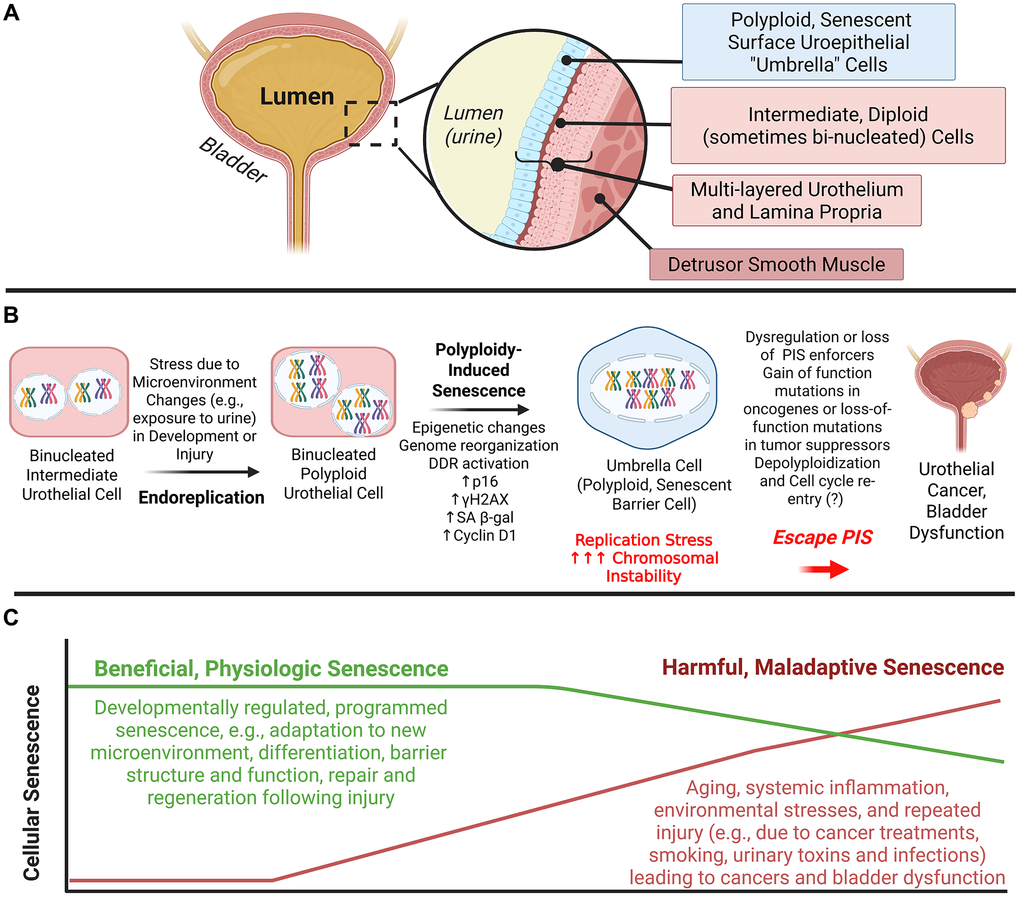
Figure 1.Polyploidy-induced senescence and its potential role in bladder dysfunction and carcinogenesis. (A) Polyploid bladder superficial uroepithelial cells (“Umbrella Cells”) at the bladder-urine interface exhibit markers of cellular senescence throughout the lifespan in mice. (B) Programmed somatic polyploidy is typically associated with terminal tissue differentiation. Polyploid umbrella cells result from endoreplication during development or repair and undergo polyploidy-induced senescence (PIS). We hypothesize that replication stress in these cells can result in increased chromosomal instability, resulting in the loss of senescence enforcers (e.g., p16). As a result, some polyploid cells can “depolyploidize” and reenter the cell cycle. This error-prone “return to division” process increases the likelihood of producing aneuploid cells, and although most progeny of depolyploidized cells die, a subset survives and continues proliferating, often acquiring genetic and epigenetic alterations that promote tumorigenesis in these highly resilient polyploid cells which can result in a growth advantage and aggressive carcinomas. (C) Developmentally regulated PIS exists in multiple organs and plays important physiological roles, allowing cells to survive their harsh microenvironments and continue to carry out their function (e.g., maintaining the urine-blood barrier in the bladder). However, mechanisms important for regulation of this beneficial senescence may become dysregulated, giving rise to harmful senescence and cancers. Harmful senescent cells can also arise from other biological mechanisms (e.g., DNA damage, mitochondrial dysfunction, inflammation, oxidative stress) common in aging and other conditions. PIS: Polyploidy-Induced Senescence, DDR: DNA Damage Response, SA β-gal: senescence associated β-galactosidase, γH2AX:
phosphorylated histone variant H2AX. This figure was created using Biorender.