





This article has been corrected: The authors have identified an unintentional error in Figure 5B affecting the baseline systolic blood pressure (SBP) values in the aging group. Specifically, Day 0 values from the young cohort were mistakenly assigned to the aged group panel during data plotting. The corresponding author, Dr. Wei-Ting Chang, has confirmed that all raw measurements were generated directly from the acquisition system and remain intact, and submitted it to the journal. After re-exporting the original machine-generated data and reconstructing the figure, the corrected panel now accurately reflects the underlying data. This correction does not affect the statistical analyses, results, or conclusions of the study. The authors have expressed their sincere apologies for this oversight.
The corrected Figure 5 is presented below.
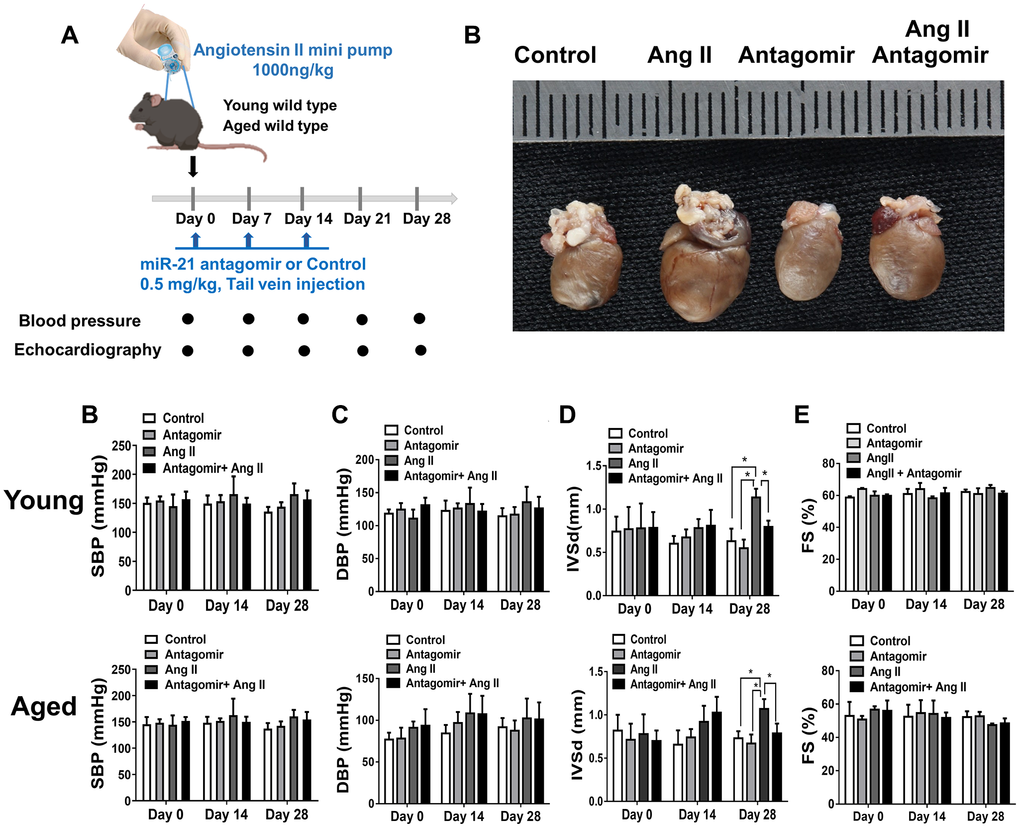
Figure 5. The treatment of miR-21 antagomir mitigated angiotensin II (Ang II)-induced cardiac hypertrophy, especially in the aged mice. (A) The study design investigating the effects of miR-21 antagomir in young (12 week-old) and aged mice (50 week-old) of Ang II-induced pressure overload. The sequential changes of (B) systolic, (C) diastolic blood pressures, echocardiography derived (D) intraventricular septal thickness at diastole (IVSd), and (E) fractional shortening (FS) in young and old mice treated with miR-21 antagomir or not under Ang II-induced pressure overload. (F) The comparison of harvested hearts in mice of control, Ang II, miR-21 antagomir and Ang II+ miR-21 antagomir. *P < 0.05 for difference from each group (N = 4–6).